
Ambulance Services
Rapid Response. Reliable Care. 24/7 Readiness.
Overview
Capabilities & Services
1. Ambulance Leasing for Industrial Projects
Provision of Basic Life Support (BLS) and Advanced Life Support (ALS) ambulances under short- or long-term contracts to ensure continuous coverage at operational sites.
These services are integrated into the client’s HSE plans to guarantee rapid response in workplace emergencies.


2. Medical Evacuation & Patient Transport
Safe inter-facility transport with continuous patient monitoring, oxygen support, and direct communication systems throughout the journey—ensuring stable care until arrival at the hospital.

3. Emergency & Event Coverage
Deployment of standby ambulances during facility maintenance, drilling and construction operations, and public or corporate events to ensure immediate response to on-site emergencies.


4. Ambulance Equipment & Medical Personnel
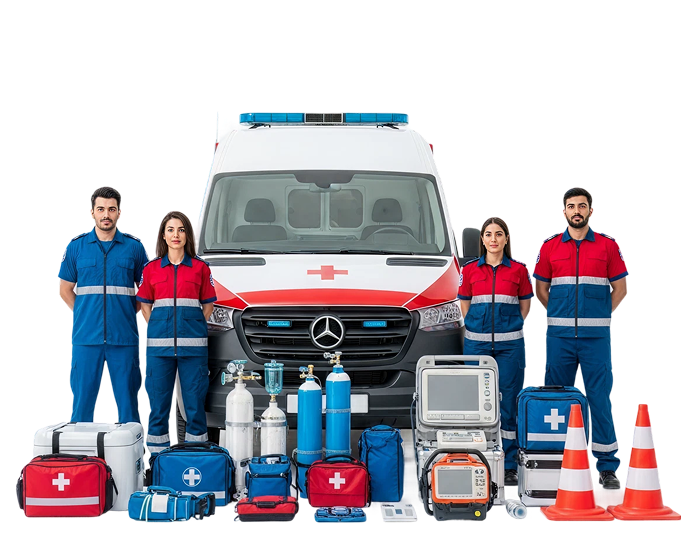
Ambulances are equipped with cardiac monitors, defibrillators, oxygen systems, spinal immobilization boards, and airway management tools.
Staff include paramedics, nurses, and emergency medical technicians trained to manage critical injuries and medical crises.
5. Maintenance & Logistical Support
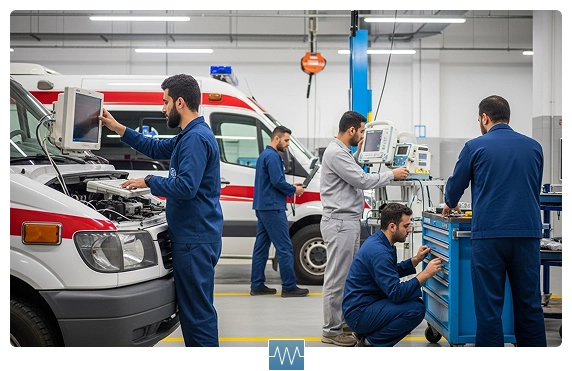
Comprehensive operational management including vehicle maintenance, medical consumables supply, and scheduled calibration of ambulance equipment through our biomedical engineering department—ensuring continuous readiness and reliable medical response.

6. Medical Supplies & Consumables
Provision of Ministry of Health–approved medical supplies including trauma kits, PPE, and emergency field tools, with direct support and upkeep to ensure full ambulance readiness at all times.
Service Model
Ambulances can be deployed within 48 hours with continuous on-site coverage.
Services can be integrated with occupational health programs and mobile clinic operations to deliver a fully connected medical readiness system across all locations.
Licensing & Reporting
RTMS provides official operating permits, medical staff accreditation, equipment calibration certificates, and regular readiness reports—along with compliant documentation and precise operational records that support full regulatory adherence.