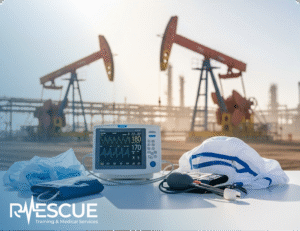
In high-risk work environments—such as oil and gas, construction, and industrial operations—external emergency response alone cannot be relied upon when an incident occurs. A few minutes can make the difference between life and death.
For this reason, medical and rescue training has become a critical priority for companies that place employee safety at the core of their operations. RTMS Iraq delivers a comprehensive range of internationally accredited training programs, including First Aid, CPR, Advanced First Aid, Emergency Medical Responder (EMR), Advanced Cardiac Life Support (ACLS), rescue operations, firefighting, and hazardous materials handling.
These programs follow globally recognized standards such as AHA, ASHI, ITLS, and NFPA—giving companies confidence that the training their teams receive is internationally compliant and meets the requirements of foreign contractors and global oil and gas operators.
They are also tailored to the real conditions of work environments in Iraq. Through realistic simulations and live scenarios, trainees learn to respond to emergencies with confidence and speed. Exercises include managing bleeding, fractures, burns, cardiac arrest, fall injuries, heavy equipment accidents, and chemical exposure incidents.
Beyond practical skills, these programs help raise safety awareness and build a strong organizational culture where prevention comes before response. Studies show that proper first-aid training can reduce incident response time by up to 50%, leading to fewer injuries, less downtime, and improved overall team productivity. Additionally, structured training enhances documentation accuracy, making internal and external HSE audits smoother and more efficient.
Advanced courses such as ACLS and EMR further strengthen on-site medical teams, enabling them to deliver high-level care until medical evacuation or mobile clinic support arrives.
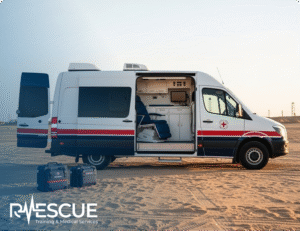
These programs can also be integrated with RTMS Iraq’s mobile clinic and ambulance services, creating a fully integrated on-site healthcare system that reduces dependence on external providers that may be delayed during emergencies.
Adopting internationally recognized medical training programs not only demonstrates an organization’s commitment to employee safety—it also strengthens its credibility with international partners, improves its safety ratings, and boosts its competitiveness in tenders and contracts that require strict HSE standards.
Employers looking to improve their emergency readiness can visit the Medical & Rescue Training page or contact the RTMS Iraq team to develop a customized training plan.